

No products in the cart.
Pipe Threading Machine
For contractors, plumbers and construction professionals, a pipe threading machine is a fundamental tool that simplifies the process of creating threads on pipes. These machines also simply the process of cutting and reaming pipes for quick operations. The pipe threading machine is therefore a key addition to the tool arsenal of anyone that works with pipes often.
What is a Pipe Threading Machine and What Does It Do?
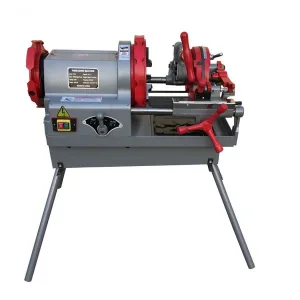
A pipe threading machine is a mechanical device used to create grooves, or “threads,” on the ends of pipes to allow for connections with other pipes, fittings or connectors. Threading pipes is crucial for creating strong, leak-proof joints in plumbing, gas lines, fire sprinkler systems and other installations where a secure connection is required.
These machines can handle pipes of various materials, such as steel, aluminum and PVC, making them versatile for multiple applications. By ensuring that pipes are precisely threaded, pipe threading machines help save time, improve joint quality and reduce errors in industrial and construction projects.
There are different types of pipe threading machines to suit various needs:
– Manual pipe threading machines – These are hand-powered devices best suited for small or occasional threading jobs.
– Portable electric pipe threading machines – Compact and powered by electricity, these machines are ideal for on-site jobs, offering mobility with efficiency.
– Stationary pipe threading machines – Typically larger and more powerful, these machines are used in workshop settings, ideal for high-volume threading work.
Choosing the Right Pipe Threading Machine for Your Needs
Selecting the right pipe threading machine depends on various factors. Here are some important considerations to help you make the right choice.
1. Threading capacity – The diameter and material of the pipes you work with will determine the machine’s threading capacity. Some machines are designed for light-duty work, handling smaller pipes (typically 1/4 inch to 2 inches in diameter). Others are heavy-duty machines capable of threading larger pipes, sometimes up to 6 inches in diameter. Be sure to select a machine that matches the diameter of the pipes you use most often.
2. Power source – Consider whether you need a manual, electric or hydraulic pipe threading machine. Each has its advantages:
3. Portability – If you need to move the machine frequently from one job site to another, look for portable options that come with wheels or a carry handle. Lightweight, compact models are best for on-the-go jobs, whereas stationary, heavy-duty machines are more practical for workshops and production floors.
4. Durability and build quality – Investing in a machine that can withstand the demands of the job is essential. Look for threading machines made from high-quality materials, such as heavy-duty metal bodies, durable motors, and rust-resistant parts. Checking the machine’s warranty can also give insight into its expected longevity and reliability.
5. Additional features and accessories – Some pipe threading machines come with useful features and accessories, such as automatic oiling systems, which help lubricate threads and reduce wear on the machine. Other machines may include a pipe cutter or reamer to streamline the entire pipe preparation process. Consider these features based on your specific needs, as they can save time and improve efficiency.
6. Budget – Setting a budget that aligns with your requirements is important. While high-quality machines may come at a higher initial cost, they offer long-term value due to their durability and performance. Choosing reputable brands with proven reliability can ensure that you’re investing in a machine that meets industry standards and delivers dependable results.
If you are in the market for a pipe threading machine, consider buying from us. We are a leading supplier of the best local and international brands to ensure you get the quality you deserve. Contact us now to lean more.